

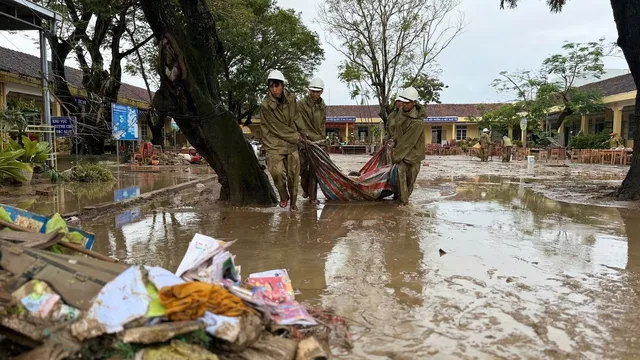
Death toll surges in Vietnam as floods devastate communities
Death toll surges in Vietnam as floods devastate communities
- Severe flooding and landslides due to heavy rains have claimed 91 lives in Vietnam and caused significant damage.
- The most affected area is Dak Lak, where heavy losses mainly resulted from drowning incidents.
- The situation highlights Vietnam's ongoing vulnerability to flooding and the need for effective disaster preparedness strategies.
Story
In Vietnam, widespread flooding and landslides triggered by heavy rains have resulted in a tragic death toll of 91 confirmed fatalities, with 11 people still missing. These severe weather conditions began about a week ago and have affected regions from Quang Tri to Lam Dong provinces spanning an extensive distance of approximately 800 kilometers (500 miles). The hardest hit area is Dak Lak, where most deaths occurred due to drowning as the heavy rains caused rivers and lakes to overflow, leading to rapid and catastrophic flooding. The economic impact of these floods is significant, with damages estimated at around $500 million. Amid this unfolding crisis, authorities are employing helicopters to drop essential supplies and assist in evacuations, given the extensive damage to roads that has left many communities cut off. The persistent rains have not only caused loss of life but have also submerged large areas of agricultural land, particularly devastating the coffee farms in Dak Lak, a key region in Vietnam's coffee production. This disaster is a stark reminder of Vietnam's vulnerability to floods, a fact compounded by the country's geographical and climatic conditions, with nearly half of its population residing in high-risk areas. In addition to human losses, significant economic repercussions are underway. Historically, Vietnam has faced the fallout from devastating floods, which have inflicted heavy damages not only from this recent flooding but also from prior typhoons earlier this year. The International Organization for Migration has stepped in to provide assistance, with South Korea pledging $1 million to support displaced communities in Vietnam. Each year, Vietnam experiences flooding that impairs thousands of families and damages infrastructure, and the current estimates indicate that the economic toll from flooding and landslides over the last few months alone exceeds $1.2 billion, showcasing the long-standing impact of such natural disasters. Rescue operations face ongoing challenges as meteorological predictions hint at further rain, raising the likelihood of more flooding. On a regional scale, Thailand and Malaysia are also grappling with severe weather; Thailand has reported deaths and extensive damage from recent heavy rains, with nearly 2 million people affected in the southern provinces. Meanwhile, Malaysia's northeastern states are confronting escalating flood conditions that are expected to worsen. The combination of climate change and the seasonal monsoon contributes to the cyclical nature of these disasters, creating a complex scenario of recovery efforts and humanitarian needs across Southeast Asia. These events highlight the urgent need for sustainable disaster management strategies to protect vulnerable populations and mitigate the impact of future weather-related incidents.
Context
Southeast Asia is frequently afflicted by flooding, a natural disaster that has profound implications for the region’s social, economic, and environmental landscapes. Various factors contribute to the prevalence of flooding in this area, notably heavy monsoon rains, rapid urbanization, deforestation, and climate change. The monsoon season, spanning from May to October, brings intense rainfall that can exceed the capacity of rivers and drainage systems, leading to widespread inundation. Urban areas, often engulfed in concrete and lacking adequate drainage, exacerbate the situation as water runoff increases, overwhelming existing infrastructure. Deforestation further intensifies flooding risks by reducing the land's ability to absorb rainfall, which is critically important in a region where landscapes can rapidly change due to human activity. The impacts of flooding in Southeast Asia are multifaceted and often devastating. Economically, flooding leads to immense losses in agriculture, infrastructure, and property. Agricultural sectors, which are vital to the livelihoods of millions, suffer from crop destruction and soil erosion, affecting food security and income. Furthermore, damage to infrastructure such as roads, bridges, and public utilities interrupts daily life and hampers economic productivity. The ramifications extend beyond immediate economic losses, as communities struggle to recover in the aftermath of disasters, seeing a decline in long-term investments and increased poverty. Socially, flooding poses significant health risks and disrupts communities. Floodwaters can lead to the spread of waterborne diseases, posing serious health threats in densely populated areas where access to clean water and sanitation might already be inadequate. The displacement of populations due to flooding creates humanitarian challenges, as displaced individuals often face barriers to accessing shelter, healthcare, and food. The psychological toll on affected communities, stemming from loss and instability, can have lasting effects that transcend generations, highlighting the need for holistic disaster management approaches that consider not only recovery but also resilience building. Mitigating the impacts of flooding in Southeast Asia requires a comprehensive strategy that encompasses improved infrastructure, community engagement, and policy reform. Investments in better drainage systems, flood barriers, and sustainable land use practices are critical in enhancing resilience against future flooding events. Encouraging reforestation and preserving natural landscapes can also aid in flood prevention. Furthermore, integrating climate change adaptation measures into national and local plans is essential, as Southeast Asia faces increasing climate variability. Collaborative efforts between governments, NGOs, and local communities are vital in establishing effective disaster preparedness and response protocols, ultimately ensuring that the region can better withstand and swiftly recover from flooding emergencies.


