

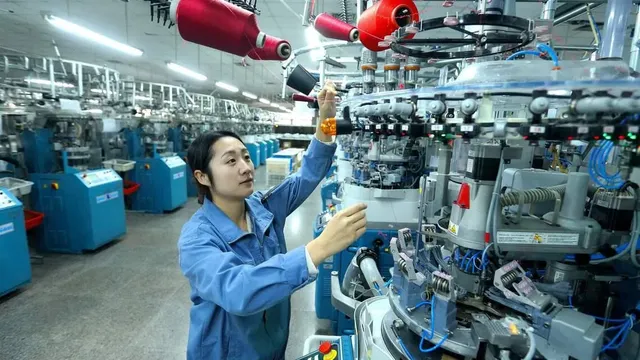
Asia manufacturing sees growth amid trade uncertainty
Asia manufacturing sees growth amid trade uncertainty
- Taiwan's PMI rose to 50.9 in December, breaking its contraction streak, fueled by increased production and new business.
- South Korea's PMI leaped to 50.1, marking the highest confidence levels in manufacturing since May 2022.
- The overall manufacturing landscape in Asia shows promise, while some countries, like India, face slowdowns.
Story
In December 2025, Taiwan and South Korea, two of Asia's key manufacturing economies, experienced a notable rebound in their manufacturing activities. This upswing came as firms entered 2026 with growing optimism amidst shifting dynamics in global demand due to ongoing trade tensions, particularly related to tariffs imposed by US President Donald Trump. The latest S&P Global Purchasing Managers' Index (PMI) data indicated positive growth trends, with Taiwan's PMI rising above the critical threshold of 50, marking the first growth indication in ten months, signaling fresh increases in production and new business driven by firmer demand conditions. Correspondingly, South Korea also marked a significant improvement in manufacturing, with its PMI reporting an increase to 50.1, the first expansion in several months. This growth was attributed to heightened demand for semiconductors, fueled by new product launches and improved external demand, particularly in the realm of artificial intelligence technology. The surge in new orders was significant, indicating that firms were confident enough to increase employment levels and purchasing activities in response to the optimistic market dynamics. The overall landscape for manufacturing in Asia is promising despite some regions reporting slight slowdowns in expansion, such as Indonesia and Vietnam. India's manufacturing sector, on the other hand, saw its growth stagnate to its weakest level in two years, though it still remains among the strongest in the region. Economists expect that the shift in US demand away from China, combined with a global push for AI-related hardware, will continue to support Asia's manufacturing sectors positively. The upturn in manufacturing noted at the close of 2025 illustrates the resilience of these Asian economies against external pressures faced through the changing trade environment. The outlook for the region’s export-driven sectors remains favorable, as manufacturers adjust to the new normal of tariffs, with an anticipation of steady growth and increased capacity as they seek to meet global demand effectively.


