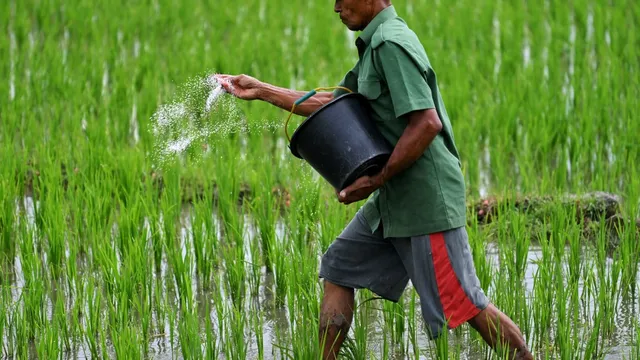
Southeast Asia, particularly countries like Indonesia, Thailand, and Vietnam, relies heavily on agriculture, which forms a crucial part of their economies. Smallholder farms contribute significantly to employment and food security, making up about 10% of the region's GDP and a third of its jobs. Recent disruptions in fertilizer supply due to the ongoing Iran conflict pose substantial challenges for these countries, leading to potential declines in crop yields and threatening food prices for consumers. According to experts, a 50% reduction in fertilizer could result in palm oil yield reductions of up to 40%, showcasing how vulnerable these economies are to supply shocks.
Agricultural professionals emphasize that the implications of fertilizer shortages extend beyond just crop production. Imelda Bacudo from the FAO asserts that these shocks have social and political repercussions, manifesting in lower farmer incomes and greater rural vulnerability, which could ultimately lead to rising prices in the consumer market. The situation is further complicated by Southeast Asia's limited fertilizer production capacity, making the reliance on imports critical yet precarious. In the face of such challenges, experts believe that regional cooperation through organizations like ASEAN could help mitigate some of the adverse effects stemming from supply chain disruptions.
The semiconductor and healthcare sectors are also at risk due to helium shortages, a critical input impacted by the conflict. Helium is essential for cooling magnets used in chip fabrication and MRI systems, and the ramifications of a helium shortage would be severe. Industries are exploring alternative sources, particularly from major exporters such as the U.S. and Russia. However, many existing facilities lack modern recycling capabilities, increasing their vulnerability to supply chain disruptions. High-precision processes require helium, and seeking substitutes often proves ineffective, as gases like nitrogen are unsuitable for advanced fabrication processes.
The overarching situation can be seen as a transition towards a more fragile state concerning critical inputs like fertilizer and helium as uncertainties continue to loom over global supply chains. Even with hopes for the Iran conflict ending soon, experts predict continued shortages for months ahead, indicating a need for industries to reassess their supply chain dependencies and invest in alternatives that reduce reliance on vulnerable imports.