politics
controversial
impactful

Trump and Xi meet in Beijing amid rising tensions over trade and Iran

May 12, 2026, 10:00 AM50
(Update: May 13, 2026, 12:20 PM)
president of the United States from 2017 to 2021
capital city of Iran
south-eastern region of Asia
capital of Shaanxi Province, China

Trump and Xi meet in Beijing amid rising tensions over trade and Iran

  • President Donald Trump and Chinese President Xi Jinping are meeting in Beijing to discuss pressing economic and geopolitical issues.
  • Topics include trade tensions, arms sales to Taiwan, and the ongoing conflict in Iran.
  • The summit aims for limited progress amidst escalating diplomatic challenges and strained relations.
Share opinion
Tip: Add insight, not just a reaction
5

Story

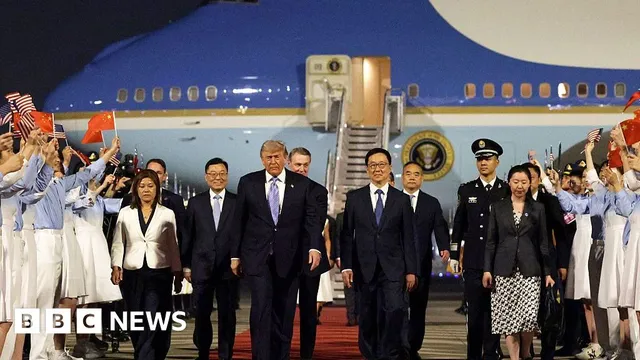
In Beijing, United States President Donald Trump and Chinese leader Xi Jinping are commencing a pivotal summit aimed at navigating economic challenges while addressing geopolitical tensions. The summit marks their first discourse in over six months, occurring at a time of heightened trade war dynamics between the U.S. and China, alongside worries about the U.S.'s involvement in the ongoing conflict in Iran. Trump’s visit comes after significant tariffs imposed on Chinese goods and a decisive ruling by the U.S. Supreme Court regarding tariffs and export controls. Discussions will focus on various topics, which include U.S. soybean exports, China’s critical rare earth supply dominance, and the controversial U.S. arms sales to Taiwan, an issue that adds further strain to their diplomatic relations. Trade relations remain fraught as both nations seek to stabilize economic ties while maneuvering through competing interests. Analysts suggest that the summit could provide limited but important opportunities for both sides to achieve small wins in addressing contentious topics, such as the reduction of tariffs and the management of export controls. Chinese officials are advocating for a deeper dialogue concerning mineral exports, particularly rare earths essential for numerous technologies, which China currently dominates globally. Conversely, the U.S. is pressing China to alter its approach toward Iran, amid concerns regarding Beijing’s supportive relationship with Tehran. The Iran war is among the most pressing issues overshadowing the summit, drawing attention due to China's efforts to mediate a possible resolution to the conflict, and potential repercussions tied to energy markets and global supply chains. Chinese Ambassador Xie Feng has called for an immediate end to the ongoing war, asserting that it disrupts international relations and affects global stability. The summit is therefore seen as a crucial moment not only for U.S.-China bilateral relations but also for addressing broader global tensions while balancing significant domestic pressures faced by both leaders. As the summit unfolds, expectations for breakthroughs remain tempered, with both leaders navigating complex political landscapes at home and abroad. Trump, facing approval challenges and dissatisfaction regarding the handling of the Iran situation, seeks to demonstrate effective leadership on the world stage, while Xi aims to bolster China's international standing and push back against perceived U.S. overreach, especially in the Asia-Pacific region. The outcomes of this summit might ultimately set the tone for future China-U.S. relations amidst an increasingly volatile international environment.

Context

The impact of US-China trade relations on the global economy has been profound and multifaceted. Since the onset of significant trade tensions in 2018, characterized by tariffs and trade barriers, the relationship between these two superpowers has shaped the world economic landscape. The United States and China together account for a substantial portion of global GDP and international trade. Disputes over trade practices, intellectual property rights, and technological advancements have not only disrupted bilateral trade but have also led to global supply chain disruptions, affecting numerous businesses and economies worldwide. The confrontation was marked by tariffs on hundreds of billions of dollars' worth of goods, prompting companies to reevaluate their operational bases and supply chains, often leading to reshoring or diversification away from China to other Southeast Asian countries. Moreover, the trade war raised concerns about the potential for a decoupling of the United States and China, which could result in a fragmented global economy. Nations that heavily rely on trade with these two countries have faced uncertainties, translating into fluctuating market conditions and investment climates. Smaller countries may find themselves caught in the crossfire of these tensions, as they navigate their trade policies amidst the shifting landscape shaped by US-China relations. This situation has prompted calls for multilateral trade agreements and greater cooperation among nations to create a more stable international trading system. The ongoing developments in US-China trade relations have also influenced global investment trends. Companies are now more cautious about investing in regions that might be adversely affected by trade disputes. The shift towards greater domestic production and sourcing has been accelerated by the pandemic, with firms looking to minimize risks associated with international supply chains. Technologies pertinent to digital trade have gained traction, and there is an anticipated surge in sectors focused on innovation and sustainability. This shift not only reflects a response to trade tensions but also highlights a broader transformation in the global economic paradigm, where resilience and adaptability become essential for future growth. Looking ahead, the future of US-China trade relations remains uncertain, influenced by domestic political climates, global economic recovery post-COVID-19, and evolving international alliances. The outcome of these relations will significantly shape not just bilateral trade but the overall direction of global economic integration. Policymakers must navigate these challenges with keen foresight, aiming to foster cooperative frameworks that mitigate tensions while encouraging a more inclusive global economy. The repercussions of failure in addressing these complex issues could reverberate through time, shaping the international economic order for decades to come.

2026 All rights reserved