

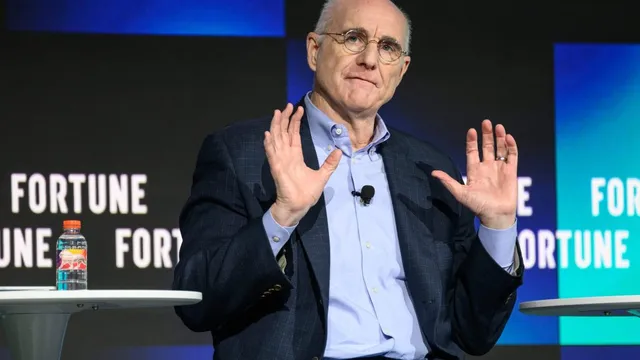
Phil Gilbert revolutionizes IBM with design thinking strategy
Phil Gilbert revolutionizes IBM with design thinking strategy
- Phil Gilbert was appointed as IBM's general manager of design in 2012.
- He implemented design thinking by allowing employees to opt-in and focusing on user outcomes.
- His approach led to the hiring of over 1,000 designers and established a Design Thinking Center of Excellence.
Story
In 2012, Phil Gilbert was appointed as the general manager of design at IBM, where he was tasked with injecting a new agility into the company similar to what he achieved at his previous venture, Lombardi. Not feeling entirely at ease in the corporate environment, Gilbert recognized the need for a significant paradigm shift rather than a conventional top-down approach. He focused on treating the change initiative as a product that required empathy for users' needs and understanding the corporate culture. Instead of forcing participation, he allowed employees to opt-in, giving them agency and fostering a sense of ownership in the process. This approach centered on design thinking, which became a fundamental principle that put customer experience at the forefront of IBM's operations. As a result, IBM hired over 1,000 designers to work in cross-functional teams alongside engineers and developers, fostering innovation and collaboration. In 2020, Gilbert established the Design Thinking Center of Excellence to streamline and unify design practices, recognizing that various teams were using different languages and methods in their design work. Meanwhile, Tony Bynum also spoke at the Fortune Brainstorm Design conference, emphasizing the need for leaders to possess 'dexterity' to navigate complex environments effectively. Bynum's strategy involves shifting focus from outputs to outcomes, akin to understanding a multifaceted object like an elephant through various perspectives. He highlighted that recognizing the value in diverse viewpoints is critical in reconstructing a shared understanding and that humility is essential for leaders in cultural transformations. Both Gilbert and Bynum acknowledged that real progress in driving change hinges on leaders being humble with themselves and their users, indicative of a broader culture shift within organizations that prioritize user-centered design.


