

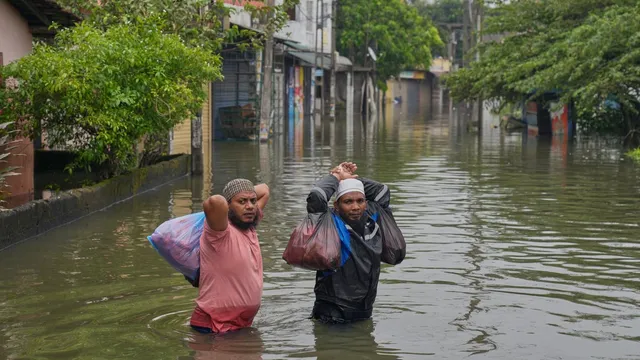
Climate change cripples Asia's water and power systems
Climate change cripples Asia's water and power systems
- Countries in Asia-Pacific will need $4 trillion for water and sanitation improvements by 2040.
- Asia's power utilities face increasing losses from climate change-related extreme weather events.
- Urgent adaptation measures are necessary to protect vulnerable populations and infrastructure from ongoing climate risks.
Story
In recent years, the impact of climate change has been particularly pronounced in Asia, affecting the continent's water and power infrastructure. According to a report released by the Asian Development Bank, countries in the Asia-Pacific region will require approximately $4 trillion to improve water sanitation between 2025 and 2040, which translates to an annual cost of around $250 billion. Over 4 billion people in the region are currently exposed to unsafe water and degraded ecosystems, a situation exacerbated by increasingly severe climate hazards such as floods and droughts. Between 2013 and 2023, Asia recorded 244 significant floods and 101 serious storms, causing widespread damage and undermining developmental gains. The continual rise in extreme weather is predicted to worsen, prompting urgent calls for adaptation measures to secure energy and water resources. Moreover, research from the Asia Investor Group on Climate Change suggests that Asia's power utilities are incurring significant losses due to climate impacts. Currently estimated at $6.3 billion a year, these losses could escalate to about $8.4 billion annually by 2050 unless companies enhance their climate adaptation strategies. There's a critical need for resilience-building in energy infrastructure, with only a handful of the major companies adequately assessing individual risk factors associated with climate impacts. The vulnerability of infrastructures is alarming, notably with India’s NTPC, Indonesia’s PLN, and Malaysia’s Tenaga Nasional flagged as having a high risk of disruption from climate change factors. The rising phenomenon of intense rainfall has been directly linked to the warming of ocean waters, particularly in the North Indian Ocean. A recent study indicated that sea surface temperatures were higher than the average for the past three decades due to climate change. This warming effect contributed to the severity of recent cyclones in countries like Malaysia, Thailand, Indonesia, and Sri Lanka. The adverse events led to tragic outcomes, including landslides and floods that claimed over 1,600 lives. Affected communities reported unprecedented rainfall levels, indicating ongoing climate instability that further threatens regional populations and resources. The cycle of natural disasters exemplifies the urgent need for rethinking infrastructure and resilience measures to confront these mounting challenges effectively. Lastly, experts emphasize that economic development should not come at the cost of climate stability. Vulnerable communities often bear the brunt of climate impacts, highlighting the need for equitable recovery and preparedness strategies. Prominent figures in climate research stress that building a sustainable future must take into account the growing threat posed by climate change. A focus on integrated disaster risk management could help mitigate impacts while improving overall societal resilience against future climate-related disturbances.
Context
Infrastructure investment for climate adaptation in Asia is paramount in addressing the increasing risks posed by climate change, which are expected to intensify in the coming decades. Across the continent, countries are experiencing extreme weather conditions, rising sea levels, and more frequent natural disasters. These challenges threaten not only the built environment but also the livelihoods of millions. By prioritizing climate-resilient infrastructure, governments can reduce vulnerability, enhance adaptation capacities, and safeguard economic growth. Investment in this area is critical for protecting critical infrastructure such as transportation networks, water supply systems, and energy grids. The pathway to infrastructure investment for climate adaptation involves a multifaceted approach that incorporates financial resources, technologies, and skilled workforce development. Governments in Asia can leverage both public and private financing mechanisms, enhancing investment mobilization through blended finance models and public-private partnerships (PPPs). They should also harness new technologies to build more resilient infrastructure, such as utilizing smart materials and green engineering practices. Moreover, local communities must be involved in infrastructure planning and decision-making processes to ensure that investments address their specific needs and vulnerabilities. As governments design their climate adaptation strategies, there must be a clear integration of climate risks within urban planning and infrastructure investment decisions. This requires comprehensive risk assessments that consider current and future climate scenarios. Policymakers need to adopt a proactive stance, institutionalizing climate resilience into national and sectoral planning frameworks. Furthermore, cross-border collaborations among neighboring countries can facilitate knowledge exchange, technical expertise sharing, and pooled resources to tackle climate challenges collectively. Such regional cooperation is vital for enhancing the resilience of infrastructure systems that are interconnected across borders. One critical area for infrastructure investment in the context of climate adaptation is water management. Effective water supply and drainage systems are crucial in preventing flooding and ensuring adequate water supply amid changing climate patterns. Investments in green infrastructure, such as wetlands restoration and urban green spaces, can also mitigate urban heat and improve water absorption during heavy rainfall. Ultimately, prioritizing substantial investments in climate-resilient infrastructure will not only help Asian countries adapt to climate change but will also pave the way for sustainable development, economic growth, and enhanced quality of life for their citizens.


