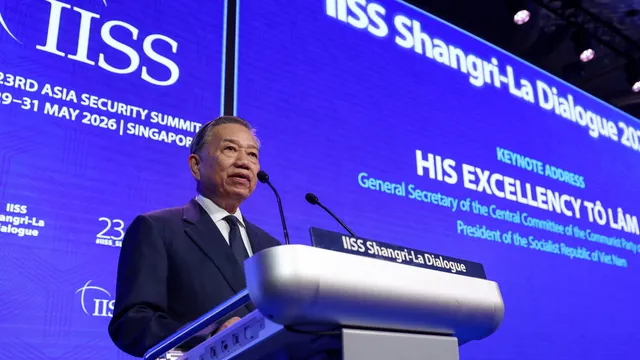
Vietnam, on May 29, 2026, hosted a significant address by its leader To Lam at the Shangri-La Dialogue, an annual international defense forum in Singapore. In this keynote speech, To Lam expressed concerns about the current state of peace and stability in Asia, emphasizing the urgent need for economic development amidst rising tensions between powerful nations. He articulated that a culture has emerged where larger nations exploit smaller ones, leading to an environment where international law is interpreted selectively. This sentiment reflects the growing anxiety in Southeast Asia regarding China's assertiveness in the South China Sea. To Lam outlined how these tensions not only threaten military stability but also disrupt economic progress critical to Vietnam's ambition of becoming a wealthy nation by 2045. He cautioned against the dangers of a global arms race, which, rather than enhancing security, could lead to increased instability. Furthermore, he highlighted how external conflicts, such as the war in Iran, could ripple through global trade dynamics, affecting Vietnam's critical oil imports and overall economic health. To navigate this precarious situation, he called for diplomatic strategies and cooperation, focusing on building strategic trust and resilience in economic foundations. This approach is vital as Vietnam balances its relations with both the United States and China while managing its own regional disputes. Vietnam's historical and strategic maneuvering, termed "bamboo diplomacy," aims to maintain stability in a complex geopolitical landscape, allowing for coexistence and fostering development without succumbing to coercion from larger powers. The speech underscored that the future of Asia depends on adherence to established international norms and the willingness of nations to engage in self-restraint and dialogue.